What it takes to repurpose an oil pipeline for CO₂
Share this page
Europe will need significantly more CO₂ transport infrastructure as CCS scales up. Reusing existing pipelines could be part of the answer – but giving an existing pipeline a new purpose is far from a simple conversion.
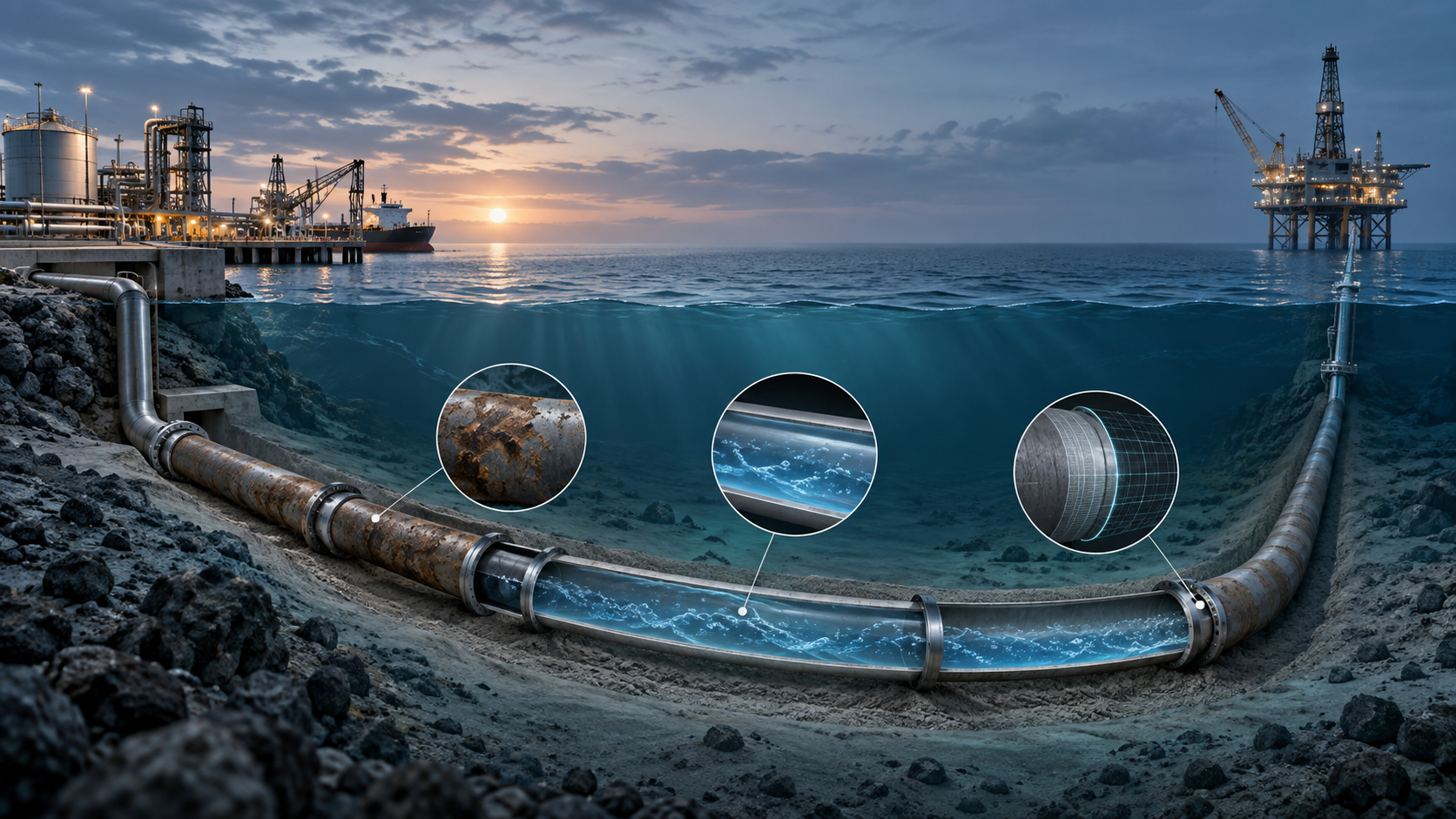
Concept illustration of CO₂ transport in a repurposed pipeline.
That is one of the questions being explored by the Abeona CCS project in the Netherlands.
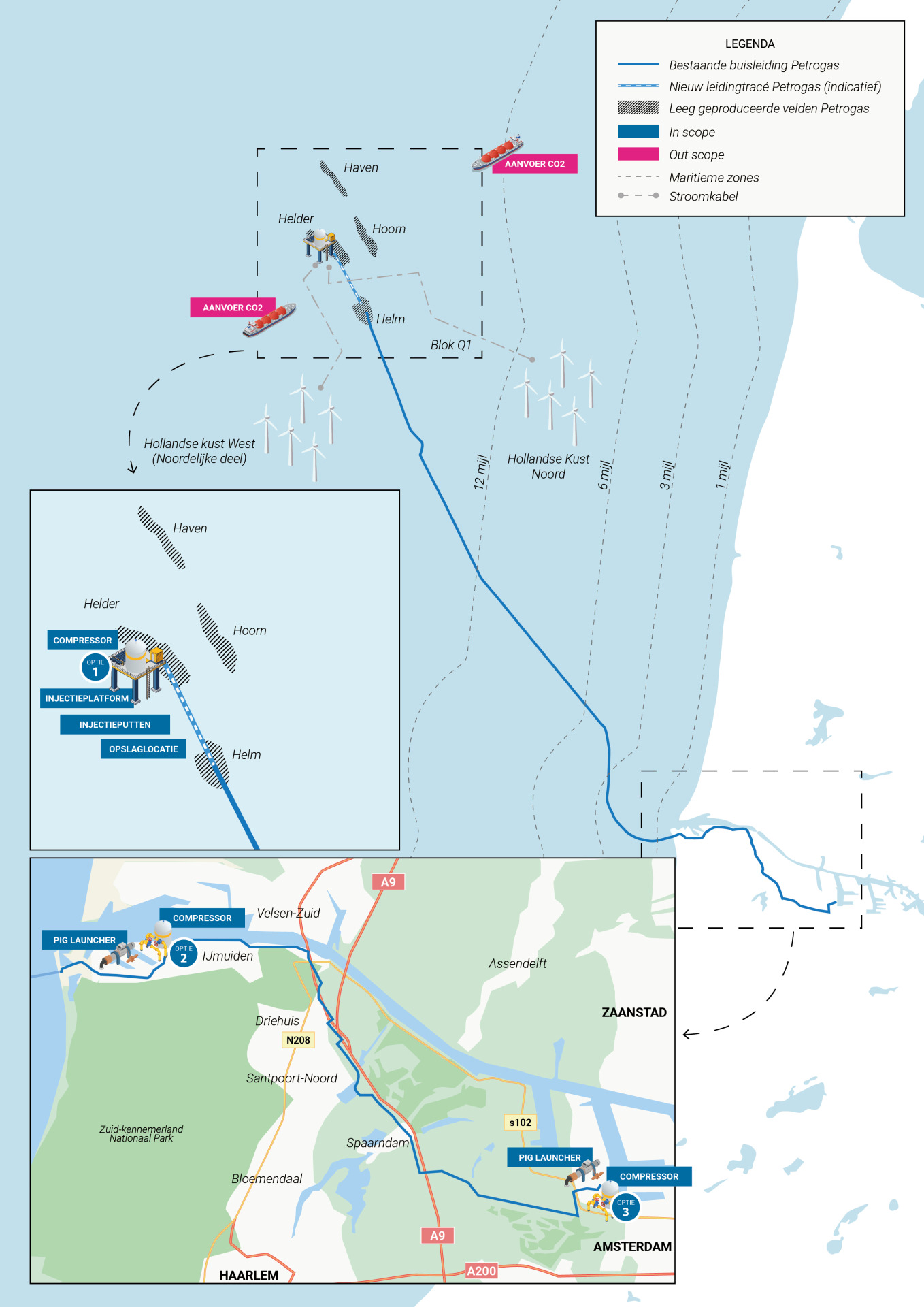
Abeona is developing a CO₂ transport and storage solution for hard-to-abate industries, with captured CO₂ transported from the Amsterdam region towards permanent storage in depleted offshore hydrocarbon reservoirs in the Dutch North Sea.
The option under consideration is particularly interesting: repurposing an existing 20-inch oil pipeline rather than building an entirely new route.
In a recent EERA JP CCS webinar, the project team took participants inside some of the engineering behind that question – and showed why determining whether an existing pipeline is suitable for CO₂ involves much more than checking whether it can withstand the pressure.
One of the key considerations is running ductile fracture.
In simple terms, engineers need to understand what happens if a crack is initiated in a pipeline. Under the wrong conditions, a fracture can continue propagating along the pipe rather than stopping close to where it began.
For CO₂ pipelines, this requires particular attention because the behaviour of the CO₂ as pressure falls following a rupture can influence whether that fracture continues or stops – the so-called “arrest”.
And the answer depends not only on the pipe itself.
Material properties, operating pressure and temperature, the composition of the CO₂ stream and whether CO₂ is transported in gaseous or denser conditions can all affect the assessment.
That makes requalification an exercise in defining the conditions under which an existing asset can safely perform a completely new job.
Existing infrastructure, new evidence
The pipeline being considered by Abeona dates from the early 1980s.
The age of the pipeline – even alongside certification for a defined lifetime – does not automatically make it unsuitable for repurposing. But neither can an engineer simply assume that a pipeline designed decades ago for oil will meet the requirements of CO₂ transport.
Requalification is therefore the outcome of a structured process of gathering and assessing evidence, including testing, analysis and verification against the requirements of the new operating conditions.
Historical information about the pipeline, its original design and its materials needs to be understood alongside scientific and operational developments, physical testing, modern assessment methods and the requirements associated with the new operating conditions.
Independent verification is also an important part of that process. Petrogas submitted the strategy it developed and the evidence it gathered to Bureau Veritas for assessment, resulting in Bureau Veritas’ statement on the feasibility of requalifying the existing pipeline.
That work has now reached an important milestone: this phase of the assessment has concluded that the existing 20-inch pipeline can be adapted for future gas-phase CO₂ transport as part of the Abeona CCS project. The planned validation and certification steps assessed as part of the process still need to be completed before long-term operations can begin.
Gas or dense phase is more than a capacity question
The webinar also illustrated another important lesson for future CO₂ networks: how CO₂ is transported matters.
Transporting CO₂ in denser conditions can provide higher transport capacity. But changing its operating state also changes its behaviour during rapid decompression – and therefore the demands placed on fracture assessment and control.
Whereas a newly designed pipeline can be engineered for this, an existing pipeline comes with fixed characteristics, which can make these trade-offs decisive.
The current requalification work on the Abeona pipeline supports gaseous CO₂ transport. Other operating concepts may require additional analysis and evidence before the same conclusions can be reached.
That distinction is a useful reminder that there is rarely one universally “best” CO₂ transport solution. Infrastructure, geography and the spatial characteristics around the pipeline, required capacity, material properties and the characteristics of the CO₂ stream all need to be considered together.
Repurposing is not a shortcut – and may be a value driver
As Europe develops a much larger CO₂ transport network, existing oil and gas infrastructure will inevitably attract attention.
Reusing suitable assets could reduce the need for new infrastructure and the additional space required for the energy transition. It may also help accelerate the development of transport capacity while reducing disruption for local stakeholders, as little or no new construction and modification activity may be required.
But the lesson from Abeona is not that any existing pipeline can simply be converted.
It is that reuse can be a valuable engineering option when it is backed by hard evidence.
Knowing which assets can be repurposed, under which conditions, and how their suitability should be demonstrated will become increasingly important as CCS moves from individual projects towards interconnected European infrastructure.
And that is exactly the kind of practical knowledge that needs to move between projects, researchers, industry and regulators as Europe builds the next generation of CO₂ transport systems.